Drake Primary School and Little Ducklings Childcare
Responding to AI
We understand that Artificial Intelligence (AI) is playing an ever-increasing role in our daily lives. While we are cognisant of this technology’s risks, we feel strongly about preparing our pupils for a rapidly changing digital landscape with transparency and nuance.
Our curriculum currently responds in three ways:
Digital literacy discussions
Our classes follow South West Grid for Learning’s Project Evolve resource base, delivering an online safety / digital literacy session each week. Where appropriate (in KS2), we have crystallised worthwhile connections between discussions already happening and the impact AI is beginning to have on them.
As an example, this is an “I can” statement for Year 6:
I can give some simple examples of content which I must not use without permission from the owner, e.g. videos, music, images.
Staff have been made aware of extensions to this discussion that consider how AI and large-scale data scraping are beginning to muddy the waters around permissions and ownership of online assets.
Year 6 exploration of data and machine learning
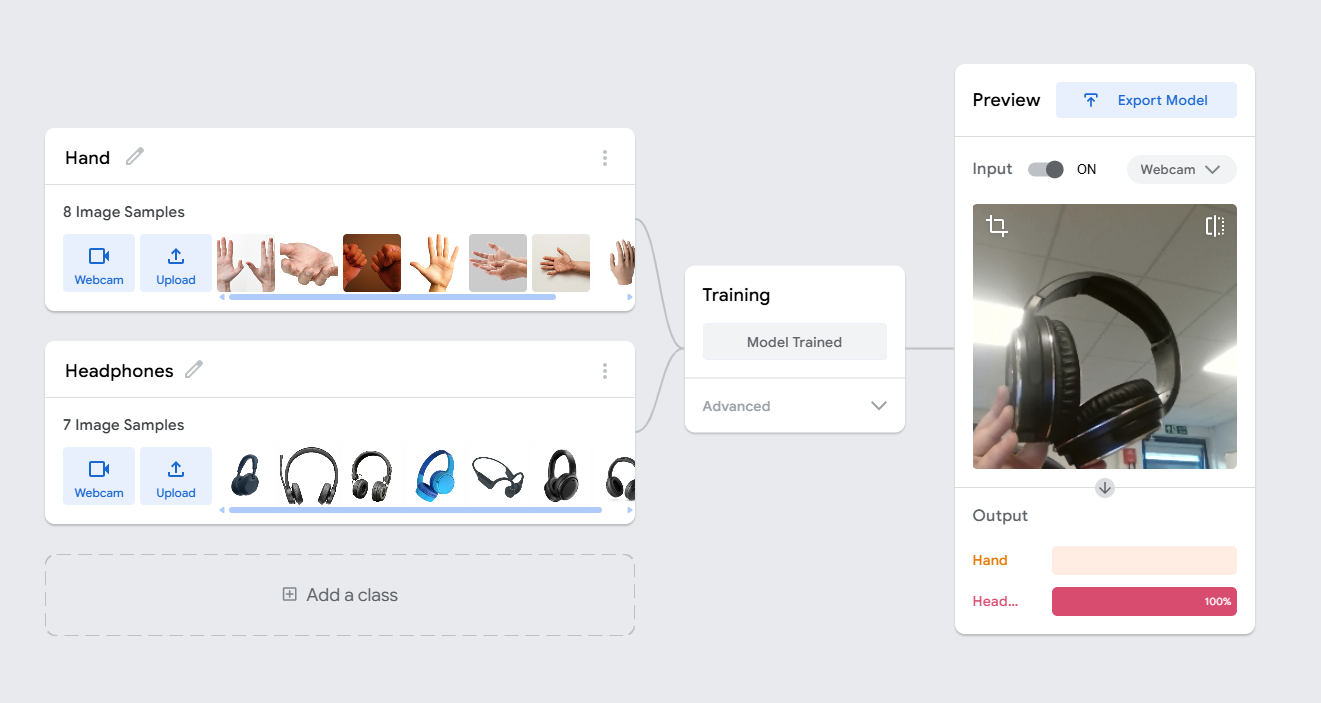
Year 6’s data unit is now a bespoke sequence that explores how AI marks a shift from rules-based programming to data-led pattern recognition. Children explore differences in data categorisation and have a go at teaching a machine to recognise objects by feeding in a limited dataset. Links are made between our simple categorisation models and the Large Language Models (LLMs) that are being deployed today.
Leaning into written programming languages rather than away
While AI is already changing the shape of programming careers, we still maintain that code-level literacy is a vitally important skill. As we lean on machines to write code and debug programs, we still need knowledgeable professionals who understand what that code is doing, who can spot errors, question outputs and apply ethical judgement.
For this reason, we are beginning to integrate a clear expectation that pupils in Years 4, 5 and 6 gain experience of programming in Python. Introducing a text-based language earlier supports children in developing precision, resilience and a deeper understanding of how programs are structured and executed. This progression strengthens their computational thinking and ensures that, even in an AI-assisted world, they are not passive consumers of generated output but active, informed creators.
We therefore continue to prioritise structured programming, logical reasoning and careful debugging. AI may assist, but it does not replace understanding.
